From airdrop to battle pass: a redesign built around the clock
Earn Alliance replaced its airdrop with the Ally Pass and swapped its mascot at the same time. Another designer and I designed it as a relay: one of us in Brazil, the other in Asia, handing the work across the globe every day.
Moving rewards from tickets to XP could cut engagement; a new mascot forced a UX overhaul; daily missions felt repetitive.
Research, personas, a new-user flow, nine entrance options scored against heatmaps, usability tests, hi-fi and components.
Shipped; A/B tests and prototypes informed the final version. Metrics available in conversation.
Context
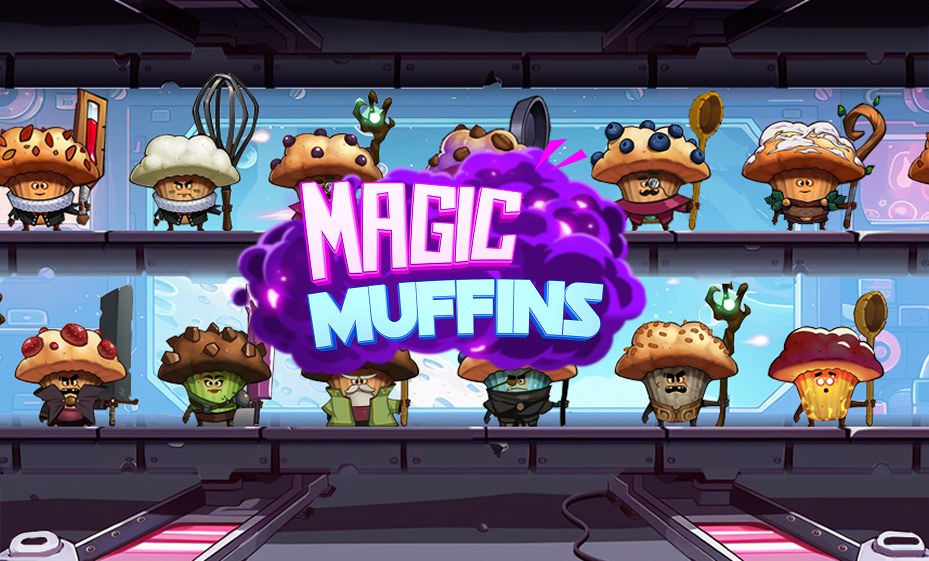
Earn Alliance connected players to 3,500+ games and rewarded them for playing. Airdrop Season 2 was replaced by the Ally Pass, a battle pass: missions → XP → levels → rewards. In the same release the old mascot gave way to Magic Muffin.
Magic Muffin, the new mascot, in a few of its moods. Click one.
How we worked
My co-designer was in Asia; I was in Brazil, eleven hours apart. Instead of splitting the project, we split the clock: one of us would start a piece of research or a set of components, the other would review it and take it forward, and hand it back at the end of their day. The file never sat idle.
Process
Research
Internal review, player feedback, empathy maps and Hotjar heatmaps, plus a benchmark of how battle passes work in games like Fortnite and Overwatch 2: how you enter, buy and collect.
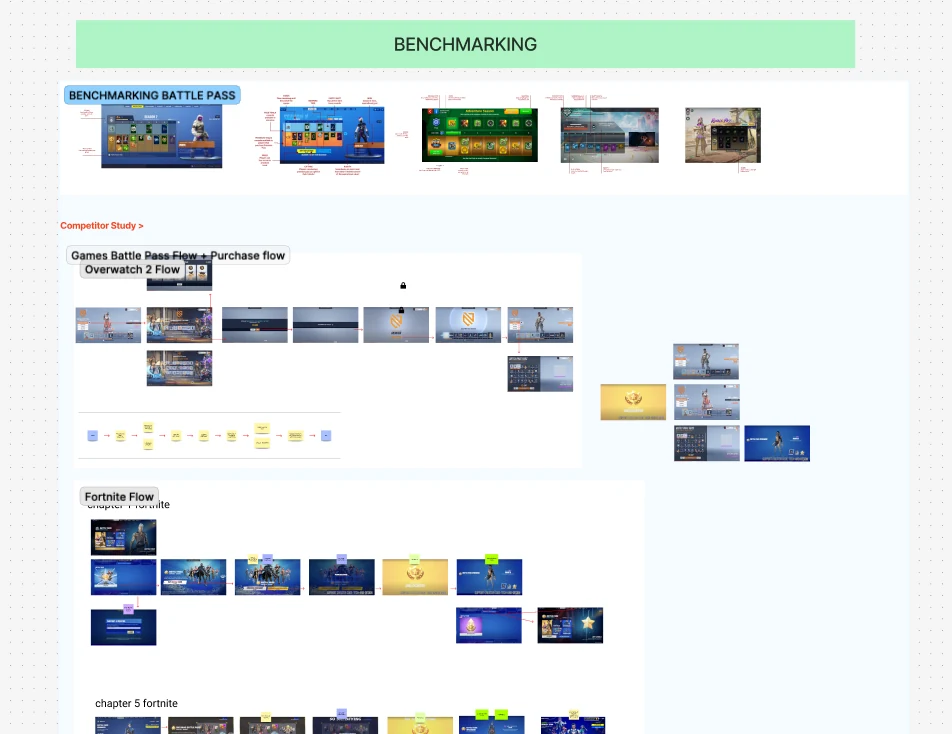
Part of the benchmark board in FigJam.
Personas
Three audiences from marketing (the Player, the Casual Gamer and the Value Extractor), with the Casual Gamer as the one we designed for first.
The Player
Competitive and engaged, looking for challenge and recognition.
- needs
- Advanced gameplay, community recognition
- barriers
- High difficulty, poor community
The Casual Gamer
Plays to relax and have fun, in short sessions.
- needs
- Accessible, easy-to-learn games
- barriers
- Little time, too much complexity
The Value Extractor
Plays to earn and get the most out of every reward.
- needs
- Clear paths to earning, tangible rewards
- barriers
- Low transparency, low reward value
The Casual Gamer
- Special missions
- Rewards, NFTs and extra XP
- Levelling up
- Rankings
- What can I earn, and how fast?
- YouTube reviews
- Friends and word of mouth
- X, YouTube and Discord
- Other gamers’ comments
- Have fun
- Earn more
- Rewards I can actually use
- Things that just work
- A clear reason to buy
- To know what I’m spending on, and if it’s worth it
- A battle pass that’s easy to learn
- Fun along the way
- Easy to get started, no blockers
- Fun without much complexity
- If I see value, I’ll pay
- Trying it before paying
- Hard missions demotivate me
- Not much time to play
- Not enough information
- “What do I do next?”
- Too many missions feel exhausting
Recreated from our FigJam persona board.
User flows
The current sign-up and onboarding, then new flows for new and existing users without a pass: entering the Ally Pass, buying it and collecting rewards.
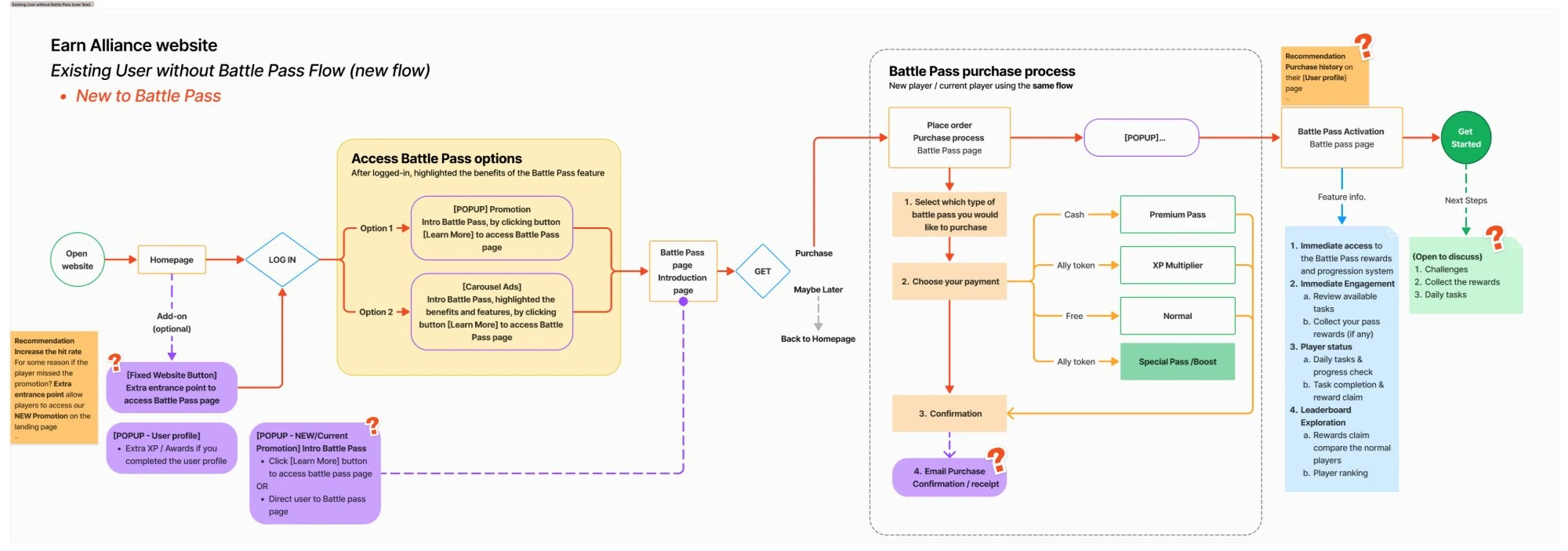
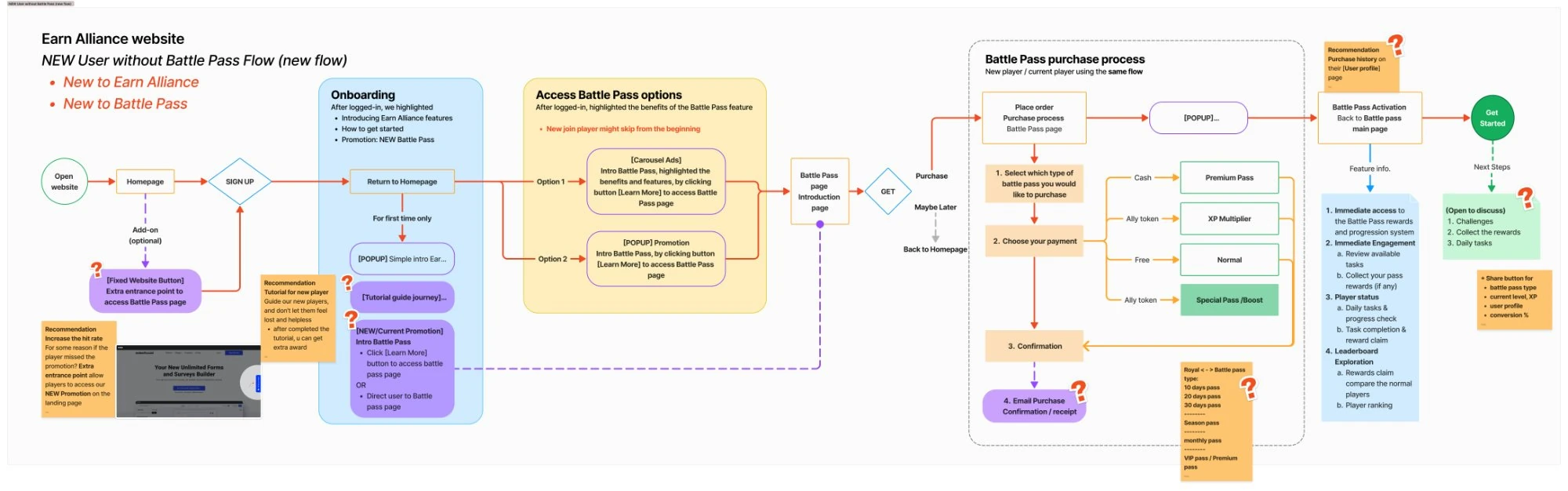
The battle pass flows for existing and new users, in FigJam.
Wireframes to hi-fi
Lo-fi ideas first, like a comparison table for the XP multiplier that previews the extra XP before you buy. Then usability tests, and the hi-fi landing page for desktop and mobile, up to the level-60 muffin rewards, built with developers.
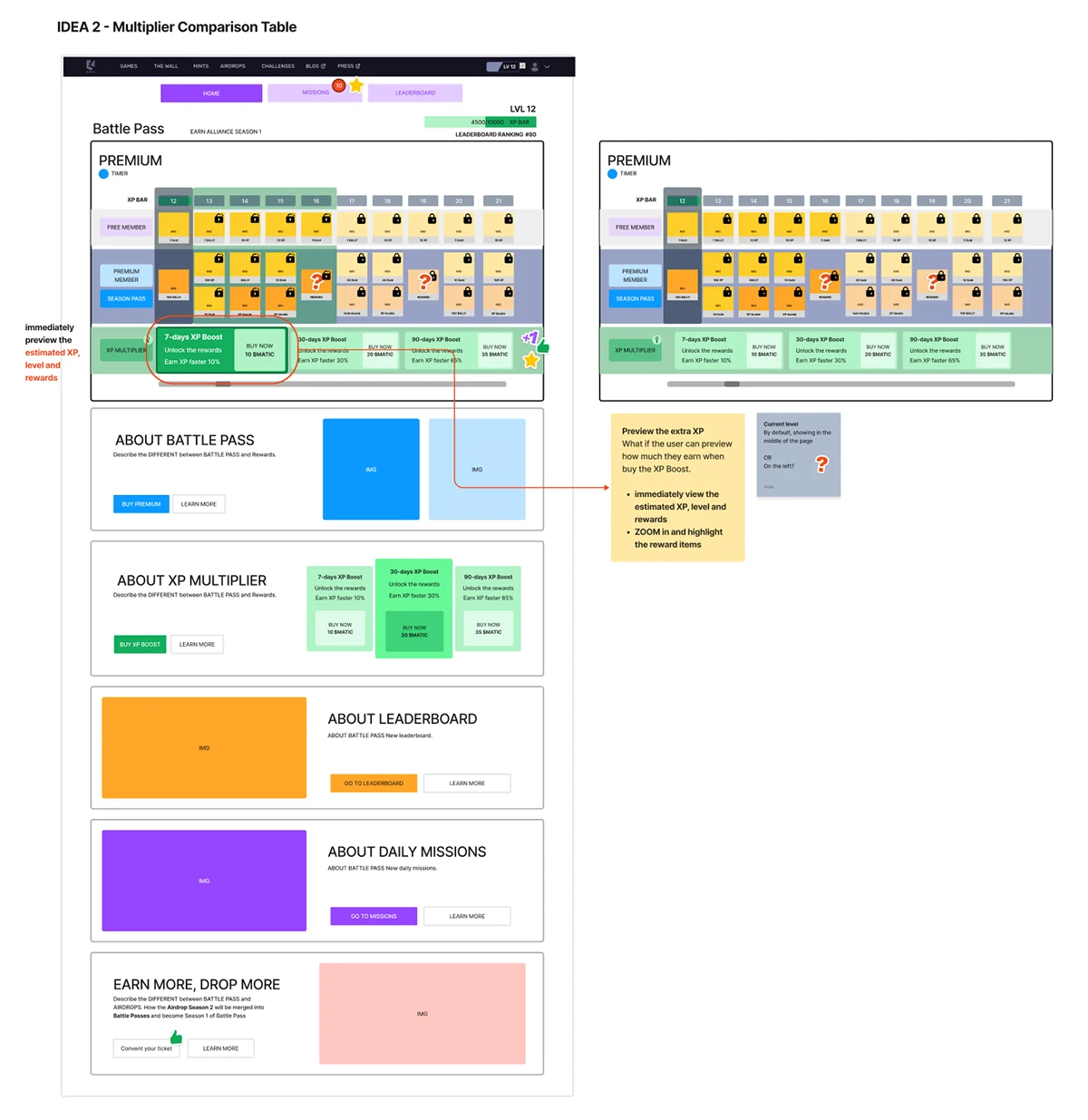
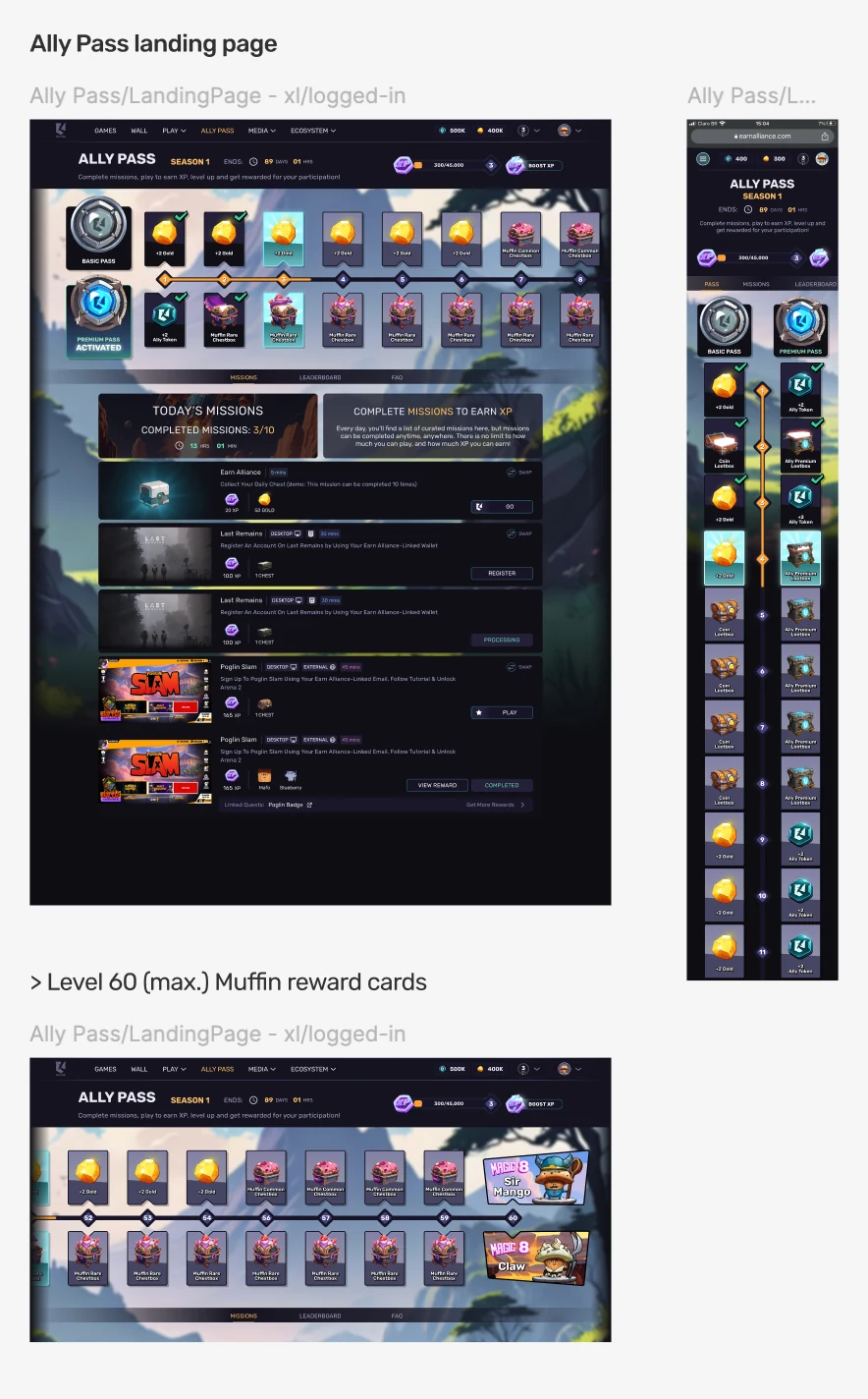
From the wireframe to the hi-fi landing page, desktop and mobile.
Decisions
Daily players reached their missions with at least two fewer clicks a day.
So the Premium Pass sold itself on the page.
Which also made the Magic Muffin launch page possible in three working days.
Takeaway
This project had everything a remote startup usually has: a short schedule, a small team and several other projects running at the same time. The requirements also changed often, and some were still open while we were designing. I learned to treat that as part of the job instead of something to wait out: show work early, ask the question before it blocks someone, and write down what was agreed.
Working as a relay with another designer, eleven hours apart, only worked because we wrote everything down. Every handoff at the end of the day had to say what changed and what was still open, so the other person could carry on without a call. That habit stayed with me, and it’s how I still write handoffs for engineers.
When we didn’t know the answer, we tested instead of debating: A/B tests and prototypes in front of players. The version that shipped was the one the data backed up, not necessarily the one we liked most at the start. It’s still one of the projects I’m proudest of.